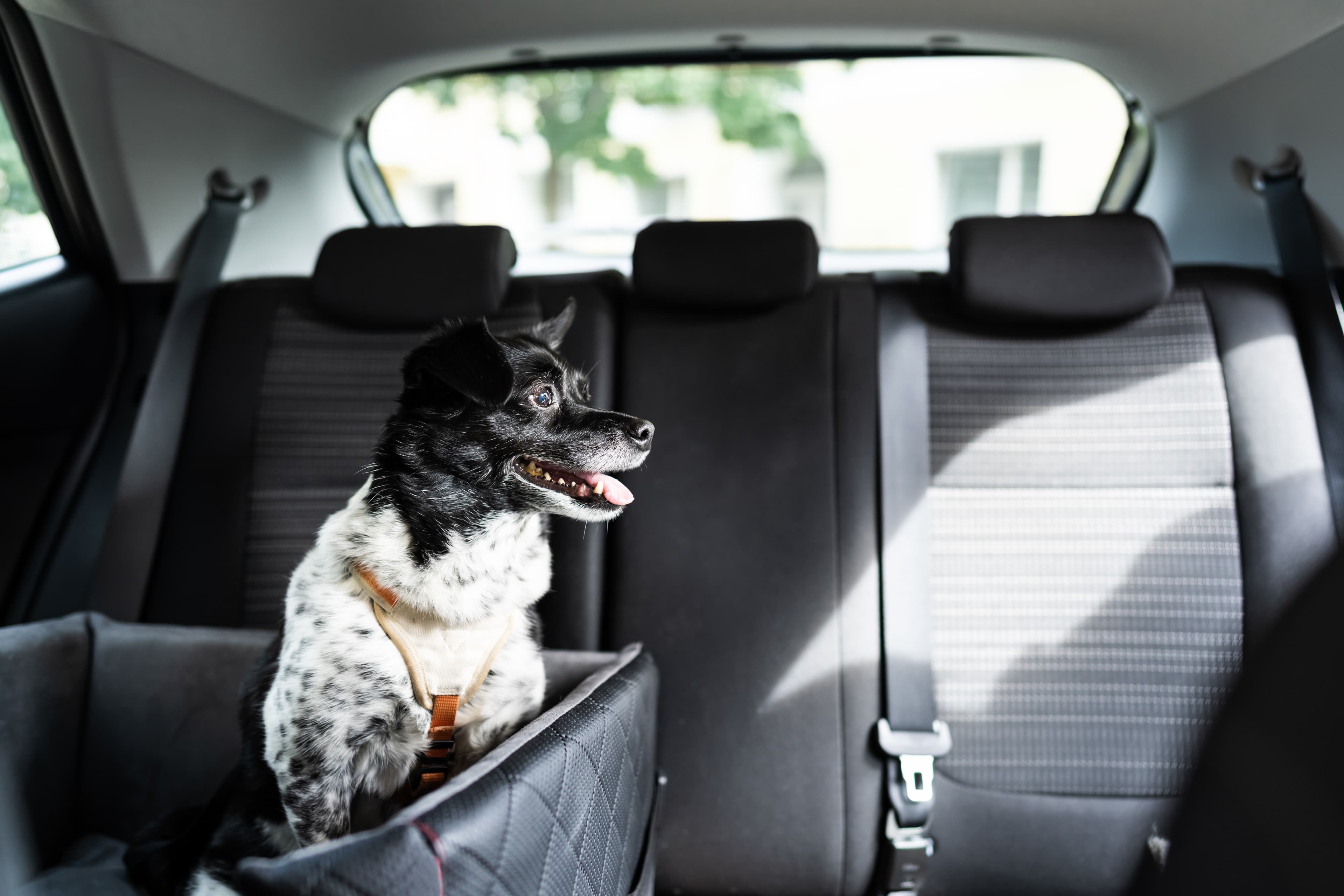
Helping your dog with travel sickness
Some dogs have no problem with car journeys, while others experience discomfort, stress or nausea. If your dog pants, whines, gets stressed, vomits or has diarrhoea when travelling, they might simply feel unwell. Below, we'll share tips to help your dog with travel sickness.
Why dogs get travel sick
Travel sickness is caused by movements that affect a dog's sense of balance. This is most common in puppies and younger dogs whose balance organs aren't fully developed, and it often improves with age. Like humans, dogs can feel worse when the journey is bumpy or involves lots of swerving, leading to anxiety, drooling and vomiting.
Often, travel sickness and a fear of cars are linked, with one leading to the other. For example, a puppy who has been repeatedly sick may develop a lasting fear of cars, even if the nausea subsides. We're focusing on travel sickness here, but you can also read more about car fear.
Often motion sickness and car fear are not completely separate and one can lead to the other. For example, a puppy that has been repeatedly carsick may have a lingering fear of driving even if the nausea has subsided. We will focus on motion sickness here but you can also read more about car fear here.
What can I do if my dog is travel sick?
It's common for owners to ask vets for anti-nausea medication or sedatives to help their dog cope with car journeys. While medication can be an option, there are also things you can do yourself to help ease your dog's travel sickness.
Other ways to reduce nausea and discomfort
Avoid feeding your dog in the 3-4 hours before travelling, as a full stomach can increase the risk of nausea.
Keep the car cool; heat and stuffy air can worsen nausea.
Allowing your dog to see out of the window can help, but it varies. If your dog seems calmer and less nauseous when they can see their surroundings, consider a car seat harness instead of a travel crate in the boot.
Some dogs react to flickering light, such as sunlight through trees. Try using window shades or travelling at dusk.
Choose your routes carefully: try to understand what your dog finds stressful, whether it's winding roads or high speeds. Drive as smoothly as possible.