How much should I feed my cat?
Feeding your cat the right amount of food is essential for their health and well-being. A cat’s nutritional needs depend on factors like age, weight, activity level, and overall health. Overfeeding or underfeeding can lead to health problems like obesity or malnutrition, so it's important to find the right balance. Here's a guide to help you determine how much your cat should eat.
1. Age
- Kittens (up to 12 months): Kittens need extra calories to fuel their growth, typically eating 3-4 times a day. A kitten-specific diet is essential for their healthy development.
- Adult Cats (1-7 years): Adult cats usually thrive on two meals a day. Their calorie needs stabilise during this time, making portion control key.
- Senior Cats (7+ years): Older cats may require specialised diets to accommodate age-related changes, including lower calorie intake to avoid weight gain.
2. Weight and Body Condition
A cat’s food intake should align with their weight and body condition.
- Healthy weight: You should be able to feel their ribs easily without pressing too hard, and they should have a noticeable waist when viewed from above.
- Overweight cats: Reduce calorie intake and portion sizes. Consult your vet for tailored advice if needed.
- Underweight cats: Increase their food intake or offer a higher-calorie food, as advised by your vet.
3. Activity Level
Active cats require more calories than less active ones. Outdoor cats or highly active indoor cats burn more energy and may need more food. Less active or sedentary cats need fewer calories to avoid weight gain.
4. Type of Food
The type of food you feed affects how much your cat should eat:
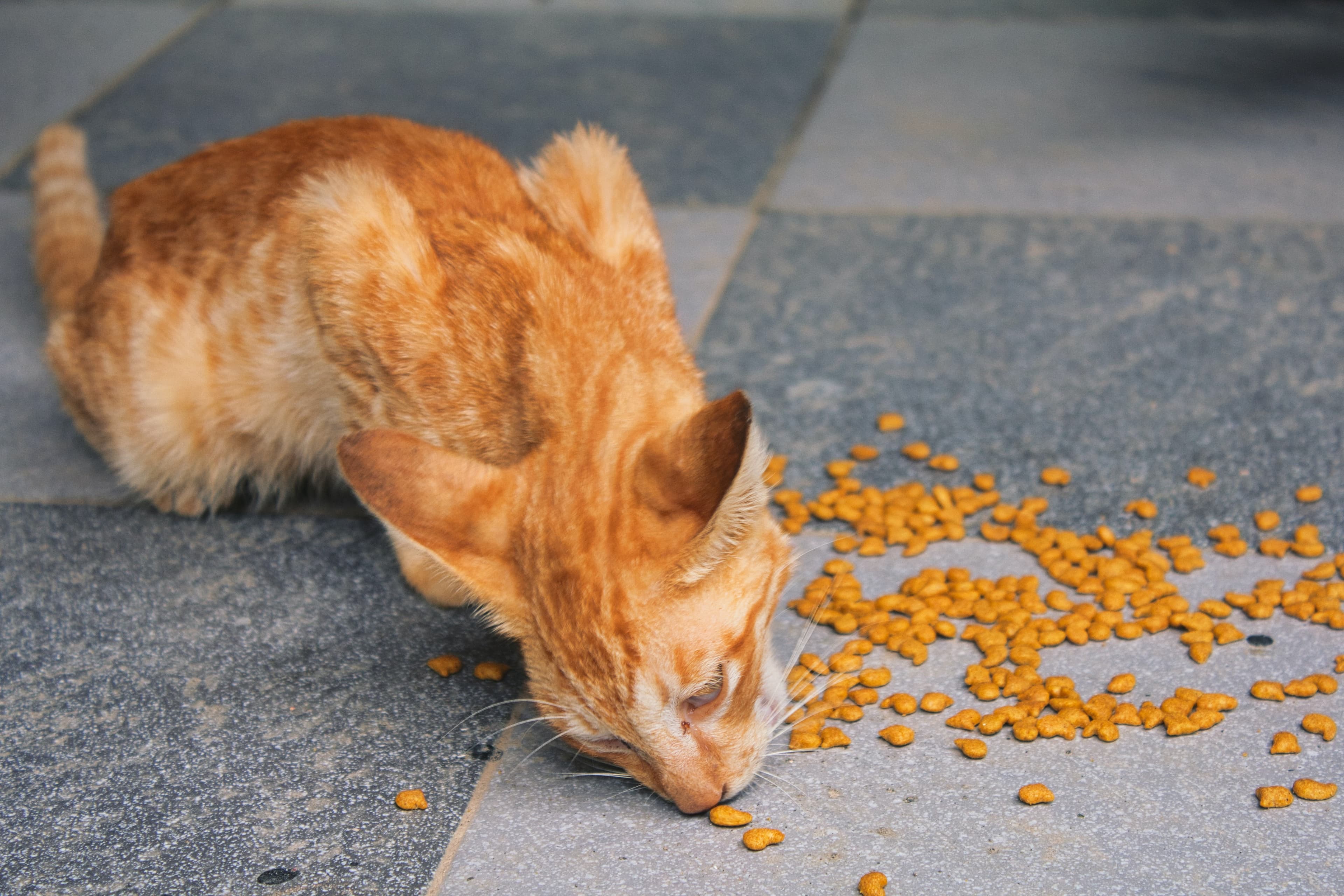
- Dry food: Dry food is calorie-dense, so smaller portions are usually sufficient to meet their energy needs.
- Wet food: Wet food contains more water and fewer calories per gram, meaning cats may need to eat a larger volume.
- Combination feeding: Combining dry and wet food can provide variety, but be mindful not to exceed daily calorie requirements.
5. Daily Feeding Guidelines
Here are general daily feeding guidelines based on your cat’s weight:
- Average adult cat (3.5-4.5 kg): 180-250 calories per day.
- Larger cats (4.5-7 kg): 200-300 calories per day.
- Smaller cats (2.5-3.5 kg): 150-200 calories per day.
This typically equates to around 30-50 grams of dry food or two to three 85-gram cans of wet food daily, depending on the specific calorie content of the chosen food.
6. Monitor and Adjust
Regularly monitor your cat’s weight and adjust their food portions accordingly. If you notice any significant weight gain or loss, revise their diet or consult your veterinarian.
Final Thoughts
Feeding the right amount of food is crucial for your cat’s overall health and happiness. Consider their age, weight, activity level, and the type of food you're offering when determining portion sizes. Adjust as needed if their weight changes and always consult your vet if you have any concerns about your cat’s diet.