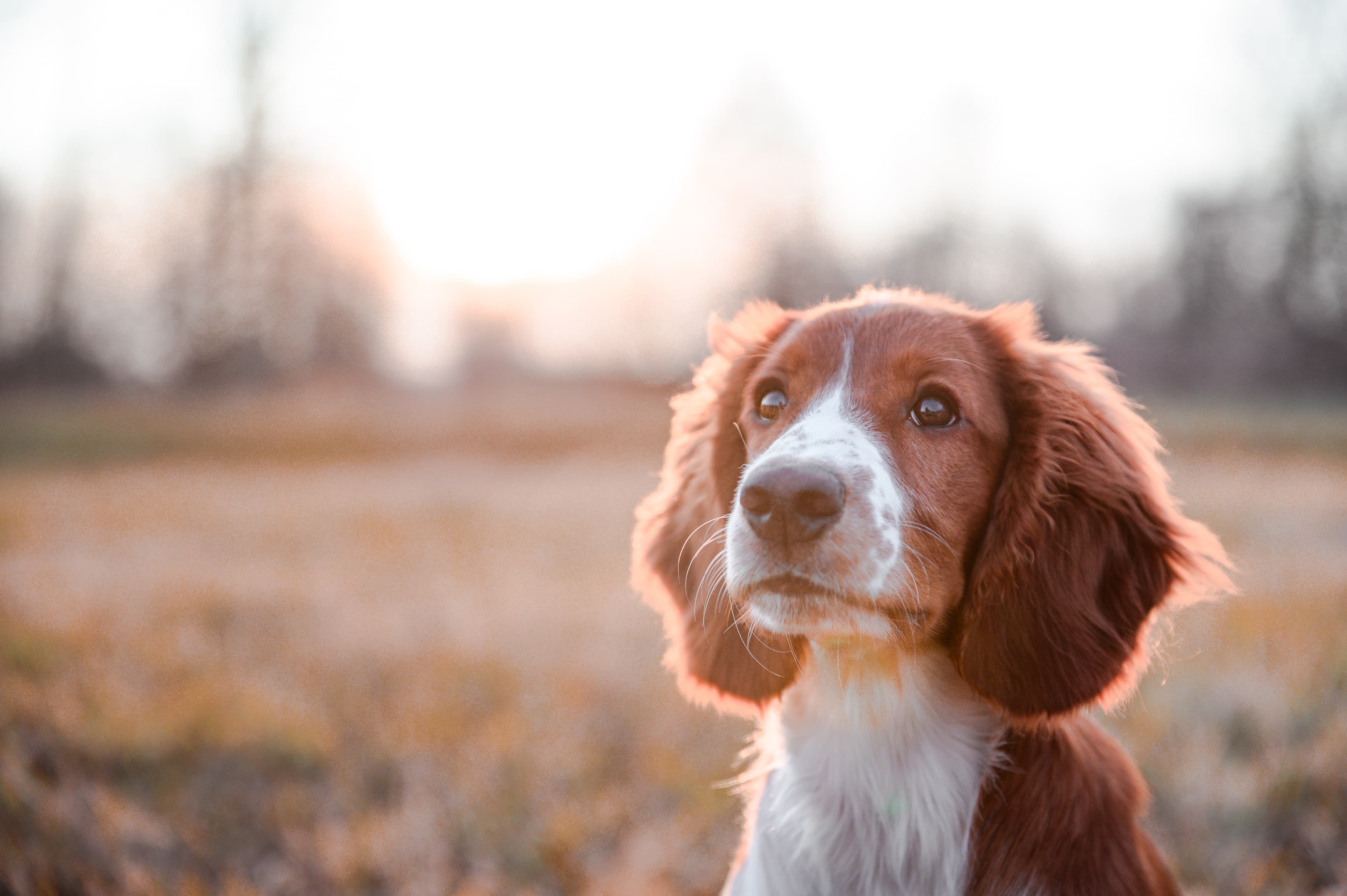
What to do when your puppy stops listening
As your puppy gets older, they’ll become more confident and independent. This is a positive development, even if it can be a bit frustrating at times. Your puppy will become more curious about their surroundings and venture further away to discover things on their own.
Things that smell good, look funny or make exciting sounds will grab your puppy’s attention. If you don’t seem keen to investigate with them, they’ll go exploring by themselves. Your puppy might look at you quizzically when you ask them to sit, as if to say, “What does that mean?” Or they might refuse to lift their nose from the ground when you call, leaving you wondering why your puppy, who was so good at coming to you last week, is now totally ignoring you.
For most puppies, this development begins around 12 weeks of age, when they start to be bolder on their own. Some puppies become very poor listeners at this point, while for others, this period coincides with sexual maturity, usually around 7-10 months of age.
It’s perfectly normal for your puppy to listen less during these periods. Although many call it the “terrible twos” or “rebellious phase,” it has nothing to do with defiance. Your puppy isn’t choosing to disobey to spite you. Dogs do what’s rewarding, has high value, or is fun. If you neither reward desired behaviours nor engage with your puppy, they’ll choose everything else over you.
Besides attending puppy classes, there are simple things you can do at home to strengthen your bond.
Engage with your puppy when you’re out together. Of course, they need to be left alone sometimes, but don’t let walks become a case of two individuals pulling in opposite directions without communicating. Stop in various places and devise little activities. This could be as simple as practicing ‘sit’ and ‘down,’ suddenly diving into the bushes to ‘find’ some treats (that your dog can have when they come to see what you’re doing), or hiding behind a tree and letting your puppy look for you. Your puppy will be more inclined to keep an eye on you if you’re a bit unpredictable, change direction, ignore the paths and go cross-country instead, and offer fun activities here and there.
Have rules and be consistent. If your puppy always has to make eye contact and wait for a “go on” before going out the gate, this will become the norm. After a while, they’ll wait inside if you forget to tell them. If you only ask for eye contact before they go out occasionally, they’ll be surprised those times and run straight out if you don’t stop them.