
How to spot herniated discs in dogs
Just like us, dogs can suffer from herniated discs. Depending on where in the back the disc is damaged and how severe the injury is, symptoms can range from pain to complete paralysis. Some breeds, such as dachshunds and French bulldogs, are at a higher risk, but with the right treatment, many dogs can live happy, pain-free lives.
What is a herniated disc?
A dog's spine is made up of vertebrae. Between each vertebra is a gel-like disc of cartilage that acts as a shock absorber, holding the vertebrae together and allowing the spine to move. As dogs age, the elasticity and structure of these discs naturally deteriorate. In certain breeds, this degeneration happens earlier. The disc becomes stiffer and harder, potentially moving upwards and pressing on the spinal cord. It may also crack, allowing the disc's contents to leak out. Pressure on the spinal cord can cause varying degrees of pain, loss of sensation, and in the worst cases, complete paralysis. The location of any sensation loss or paralysis depends on where the herniated disc is in the spine and how much damage there is. Common sites for herniated discs are between the vertebrae at the junction of the thoracic and lumbar spine (around the last three ribs), but the discs in the neck can also be affected.
When should I suspect my dog has a herniated disc?
Because herniated discs vary in severity, so do the symptoms. Milder cases might show significant back pain without any loss of sensation or difficulty walking. More severe cases make it harder for the dog to move normally. In the worst scenarios, the dog can become paralysed and unable to move at all.
The following symptoms may indicate a herniated disc:
- The dog appears hunched and is reluctant to move.
- The dog cries out when bending its neck downwards, for example, when about to eat.
- Uncoordinated movements, such as wobbliness or swaying gait.
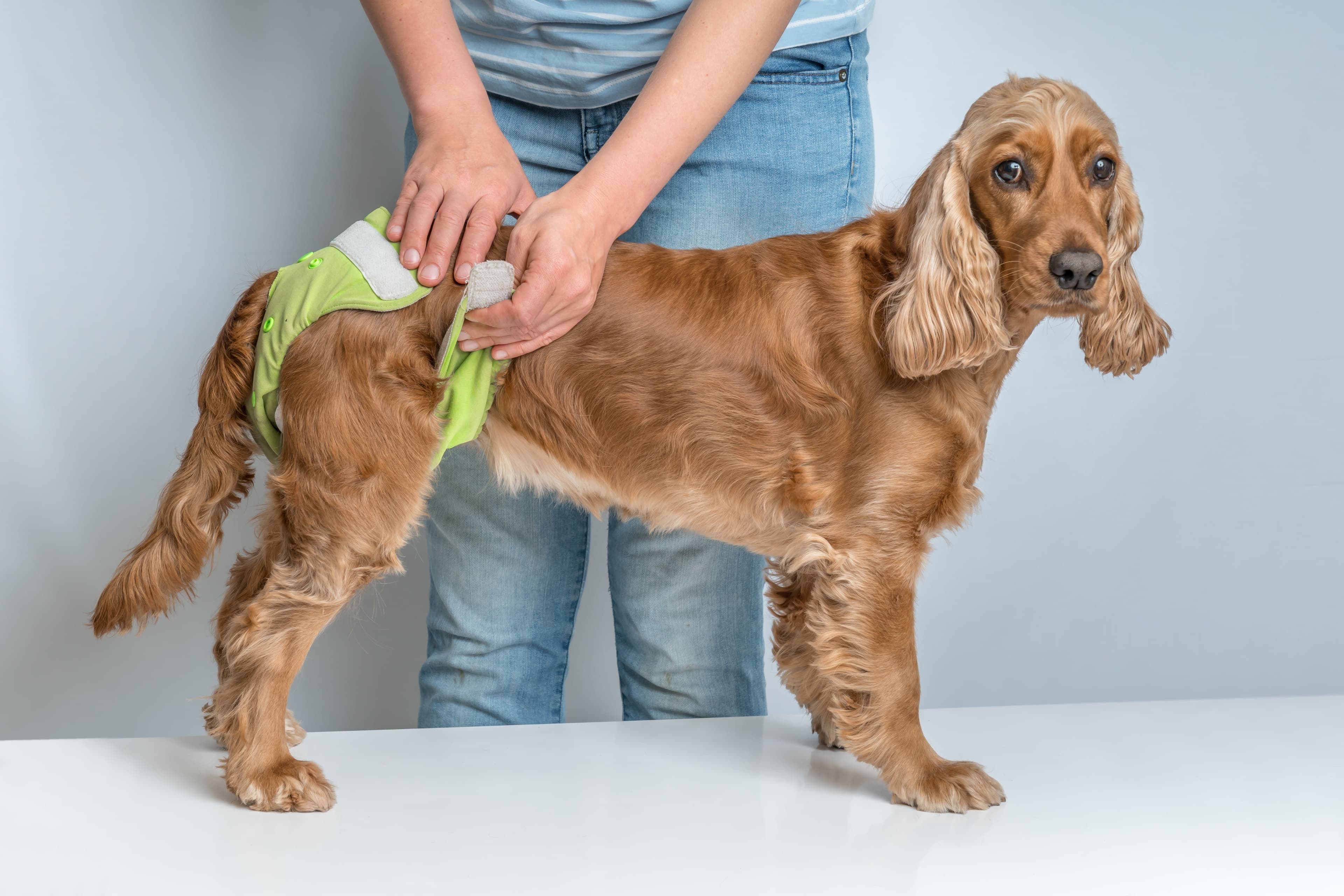
- Paralysis: this usually affects the hind legs. The dog may drag its back legs and sometimes lose bladder control.
What happens at the vet?
A vet will conduct a thorough examination and perform tests to assess nerve function. Many herniated discs aren't visible on standard X-rays because cartilage isn't dense enough to show up. More advanced imaging, like an MRI or CT scan, is often needed for a definite diagnosis. A contrast X-ray, where a dye is injected into the spinal canal, can also help pinpoint the location of the spinal cord narrowing. If the herniated disc is mild, your vet might opt against more advanced imaging, assessing the situation case-by-case in discussion with you.
Treatment
Milder cases of herniated discs can often be managed at home with pain relief and strict rest. Your dog should only be walked on a lead and kept confined indoors to minimise movement that could further damage their back. Even though painkillers might make them feel better and more willing to move, it's crucial to prevent this. Improvement in dogs with milder disc herniations is often seen within 2-8 weeks.
Surgery may be necessary for dogs with more severe herniated discs or those who haven't responded to home treatment with rest and pain relief. It's a complex procedure requiring lengthy rehabilitation and physiotherapy afterwards. Post-surgery, your dog might struggle with walking independently and controlling their bladder, potentially needing several days of hospitalisation. While recovery takes time, the prognosis for a return to a pain-free life is generally good.