
Aggression in cats
Your cat is probably loving and kind most of the time, but sometimes, just like us humans, cats can show aggressive behaviour for various reasons. This is nothing to be alarmed about, as cat aggression is actually among the most common behavioural issues we see. Here, we'll explore the reasons behind it to help you understand your cat better.
Cause of aggression
Cats are predators and their behaviour is driven by survival instincts. This can include hunting prey, defending themselves and their territory, or keeping rivals at bay.
A lack of socialisation and handling when they were kittens can also contribute to aggression problems in adult cats. This can make them anxious and fearful, leading them to defend themselves.
As well as natural survival instincts, pain can be a common cause of aggression. If your cat suddenly becomes aggressive towards you or others in the home, pain might be the reason, and a trip to the vet may be needed.
Hunting behaviour at home
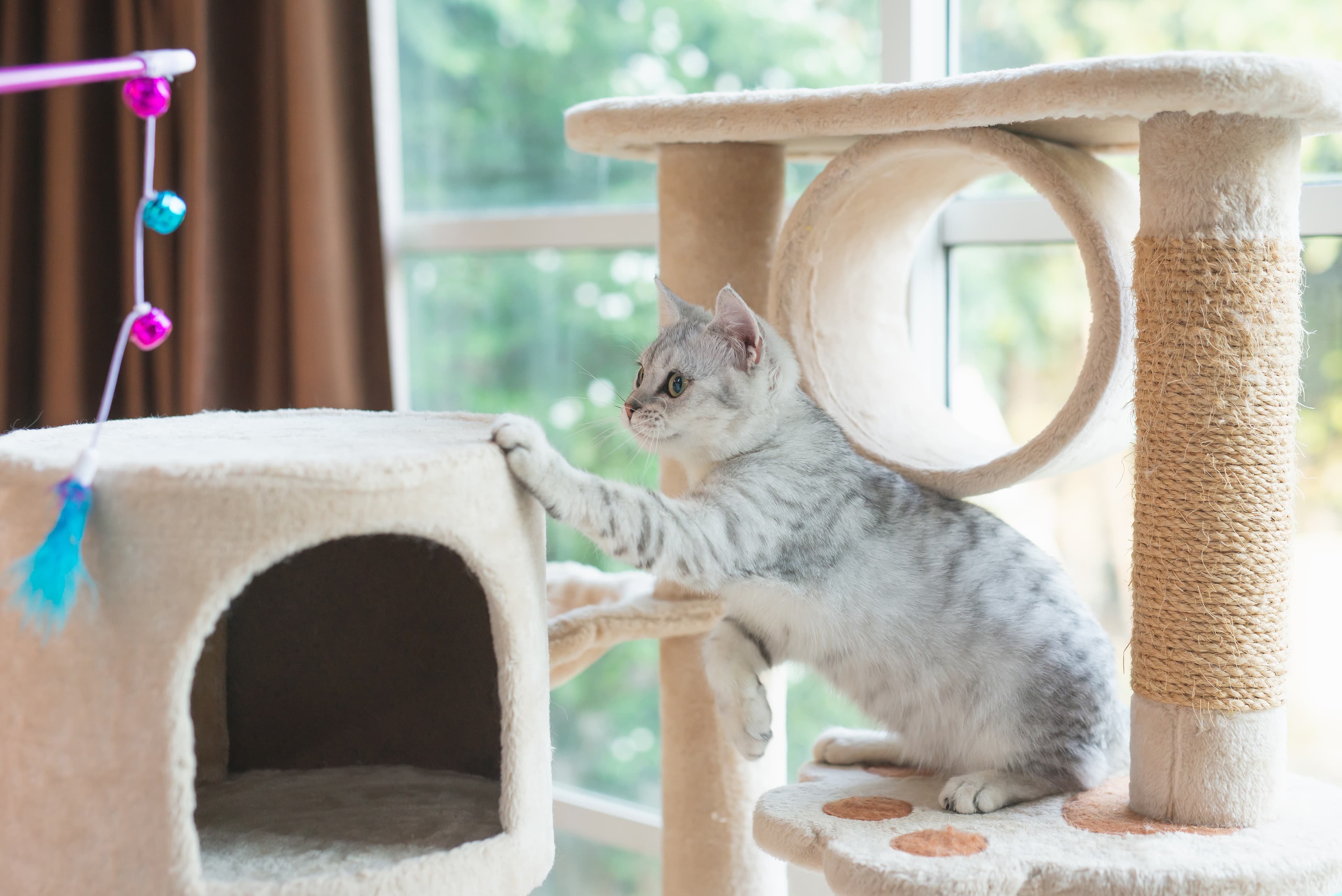
Playing with cats often triggers their hunting instinct, which can lead to aggressive behaviours. Never play with your hands, as your cat might mistake them for prey, increasing the risk of injury. Instead, use a long toy that your cat can chase and catch.
Indoor cats don't have the same opportunities as outdoor cats to satisfy their natural hunting needs. This can lead to them exhibiting these behaviours towards you in the home. If your cat lurks behind furniture and then attacks, try to stand still if possible and don't make it a fun game. If you notice your cat fixating on you, invite them to play chase with a toy instead.
Your indoor cat might also become fixated on birds or other cats when looking out of the window. They may then redirect this frustration towards you if you walk past. The cat is in a 'hunting mode' which can be broken by calmly talking to it as you pass or distracting it with a toy.
Dealing with handling aggression
Cats are often affectionate and enjoy being petted, making them wonderful companions. However, not all cats like to be cuddled, perhaps because they weren't handled much as kittens. It's important to get your cat used to touch, always on their terms.
Always end a cuddle session if your cat stops purring, opens its eyes, stiffens up, its tail starts to swish, or its ears droop. Pay close attention to your cat's body language. If they start growling or hissing, back off and give them space. Remember, all touching should be on the cat's terms, and keep handling sessions short.
Have you ever had your cat be affectionate, only for them to suddenly turn and lash out with a bite or scratch? This isn't because they don't like you. They're likely confused by being both a pet and a predator. They're simply acting on pure instinct to protect themselves.
Aggression towards other cats
For the most part, cats try to avoid confrontation by running away from threatening situations. However, when escape routes are blocked, disputes can occur. Cats, like dogs, can get along and be affectionate towards each other, but it's good to give them space to retreat. Cats have individual personalities and preferences; some just don't fit together. Give cats plenty of space and time to get used to each other, but sometimes rehoming might be the best option if they don't get along.
Aggression towards neighbourhood cats is very common. Cats have strong territorial instincts, especially unneutered males. Where there's ample space, cats usually avoid fights, resolving conflicts from a distance. However, in limited spaces, like urban areas, they might fight over territory. In these cases, talking to neighbours to limit contact times could be helpful.
Aggression towards neighbouring cats is very common. Cats have strong territorial instincts and these are especially strong in unneutered male cats. Where there is space, cats usually do not get into fights with each other but resolve conflicts at a greater distance. However, where space is limited, such as in urban areas, cats can get into fights over territory. In these cases, it may be useful to talk to neighbours to find ways of limiting the time cats can come into contact with each other.
What to do if your cat bites or scratches you
Try to stay calm if your cat bites or scratches you. Shouting or getting angry might make your cat less receptive to cuddles in the future.
Wash any scratches or bites immediately in warm, soapy water and apply an antiseptic cream. If your wounds become infected or you develop symptoms like a fever, headache, or swollen lymph nodes, always seek medical attention.